
In the competitive wireless earbud market, the rivalry between Apple’s AirPods and Samsung’s Galaxy Buds stands as the ultimate clash of the titans. These products represent the pinnacle of each brand's technological prowess and user experience philosophy, serving as much more than just audio tools—they are essential components of their respective digital ecosystems.
For anyone looking to upgrade their audio experience, the burning question remains: "Which one truly fits my lifestyle?" This guide dives deep into design, audio fidelity, noise cancellation performance, and cross-device synergy. Through this detailed analysis, we aim to provide the clarity you need to make an informed decision without regrets.
1. Apple AirPods: Minimalism Meets Unrivaled Convenience
AirPods are credited with bringing wireless earbuds to the mainstream. Combining Apple's signature sleek design with powerful proprietary silicon, they have established themselves as the gold standard for seamless user interaction.
The AirPods Advantage
The crown jewel of the AirPods series is undoubtedly "Magical Connectivity." For Apple users, opening the case near an iPhone triggers an instant pairing animation that remains unmatched. Furthermore, the Automatic Device Switching across iPhone, iPad, MacBook, and Apple Watch creates a fluid workflow that other brands struggle to replicate.
Apple’s Transparency Mode, particularly in the Pro and Max models, is widely regarded as industry-leading. It processes external sound so naturally that users often forget they are even wearing earbuds, making it ideal for urban environments and office settings.
The Spatial Audio feature with dynamic head tracking utilizes gyroscopes and accelerometers to create a 360-degree theater-like experience. For those who frequently consume content on Apple Music or major streaming platforms like Netflix and Disney+, this creates an immersive soundscape that is truly transformative.
The Downsides of the Apple Route
The most significant barrier is the premium price tag. Compared to flagship models from competitors, AirPods often command a higher price. Additionally, compatibility with Android devices is heavily restricted. While they can connect via standard Bluetooth, key features like battery level tracking, firmware updates, and Spatial Audio are unavailable, severely diminishing their value for non-Apple users.
Design remains a point of contention as well. The "stem" design, while excellent for microphone placement and call quality, may not appeal to everyone and can be prone to catching on masks or clothing during intense physical activity.
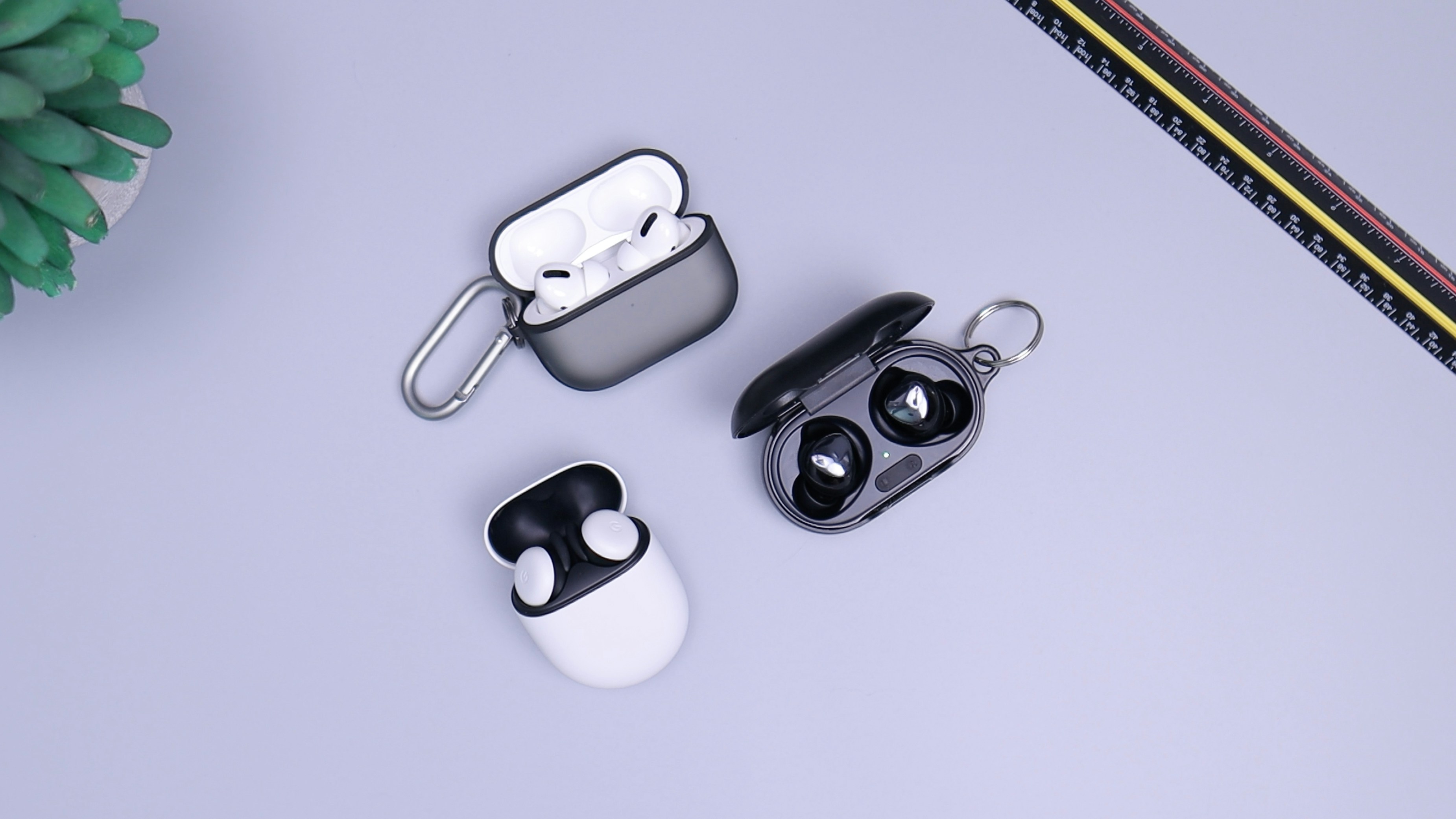
2. Samsung Galaxy Buds: Hi-Fi Audio and Value Synergy
Samsung's Galaxy Buds lineup has evolved rapidly, leveraging AKG's acoustic expertise to deliver high-fidelity sound. For Android enthusiasts, they are often considered the best all-around choice in the market.
Why Choose Galaxy Buds?
The primary strength of the Galaxy Buds lies in "Sound Quality and Tuning." Since the acquisition of Harman International, Samsung has utilized AKG’s tuning signature to provide a balanced, high-fidelity audio profile. The Pro series, in particular, is lauded for its punchy bass and crisp highs, making them a favorite among music purists.
Value and Versatility are also major draws. With a diverse lineup including the premium "Pro," the budget-friendly "FE," and standard models, Samsung offers something for every price point. Frequent promotions often make these buds significantly more affordable than AirPods while offering comparable technical performance.
In terms of design, the compact "bean" or "pebble" shape provides a discreet, low-profile fit that sits securely within the ear. This minimizes wind noise and prevents them from being easily knocked out. The Galaxy Wearable app also offers extensive customization, allowing users to fine-tune Equalizer (EQ) settings and touch controls to their liking.
The Galaxy Buds Limitations
Constraints within the iOS environment are a major hurdle. While Samsung previously offered a Buds app for iOS, recent models lack official app support on iPhones, meaning firmware updates and deep customization are impossible for Apple users.
Furthermore, while the Ambient Sound mode is highly functional, some users report a slightly mechanical or "processed" feel compared to the natural transparency of AirPods. Call quality, while consistently improving, can sometimes struggle to match the clarity of the stem-equipped AirPods in extremely noisy environments.
3. Feature-by-Feature Comparison
To help you compare at a glance, here is a breakdown of the key metrics for the latest models.
| Feature | Apple AirPods Series | Samsung Galaxy Buds Series |
|---|---|---|
| Sound Profile | Neutral and balanced; Specialized in Spatial Audio | AKG Tuned; Emphasized bass and crisp highs |
| Noise Cancellation | Superior low-frequency isolation and natural transparency | Excellent ANC with AI-driven ambient noise control |
| Fit / Design | Stem structure; Open-fit or Silicone-tip options | In-ear "bud" shape; Compact and discreet fit |
| Ecosystem Synergy | Optimized for iOS/macOS (seamless switching) | Optimized for Android/Windows (highly customizable) |
| Price Point | Premium ($129 - $249+) | Competitive ($99 - $229+) with frequent sales |
4. Expert Recommendation: Making the Choice
Ultimately, the best hardware isn't about specs alone—it's about "the tools you already use every day."
If You Are in the Apple Ecosystem (iPhone, Mac, iPad)
We strongly recommend AirPods. The "continuity of connection" provides a level of convenience that is hard to give up once experienced. For remote workers or students who switch between a laptop and a phone frequently, the automatic switching feature is a massive productivity booster.
👉 Check out the AirPods lineup on Apple's Official Site
If You Are a Galaxy or Android User
Galaxy Buds are the clear winner. When paired with a Galaxy device, you gain access to the Seamless Codec (SSC) for high-quality audio, Game Mode for low latency, and effortless pairing. They also offer better integration with Google Assistant for hands-free utility.
👉 Explore the Galaxy Buds range on Samsung's Official Site
5. Pro Tips for Better Longevity
Regardless of your choice, follow these tips to maximize the life and performance of your earbuds:
Regular Firmware Updates
Manufacturers frequently release updates to improve ANC algorithms and connection stability. Check your companion app regularly.
Ear Tip Optimization
A poor seal ruins sound quality and ANC. Use the "Fit Test" features in the settings to ensure you are using the correct tip size.
Battery Health Maintenance
Avoid letting your case reach 0% battery. Keeping the charge between 20% and 80% can significantly extend the overall lifespan of the lithium-ion cells.
Maintain Hygiene
Earwax and dust buildup can muffle sound and damage the mesh. Clean your buds gently with a soft, lint-free cloth or a specialized cleaning tool.
Closing Thoughts: The Best Fit for Your Ears
In conclusion, AirPods offer an unrivaled user experience and world-class transparency, while Galaxy Buds provide superior audio balance and incredible value for money.
While a smartphone is just a tool, the earbuds that connect to it define how you experience your audio day. We hope this comparison guide helps you find the perfect pair that brings music to your life with crystal clarity.
Enhance your digital lifestyle with FreeImgFix.com!